How AI Can Improve Healthcare Interoperability
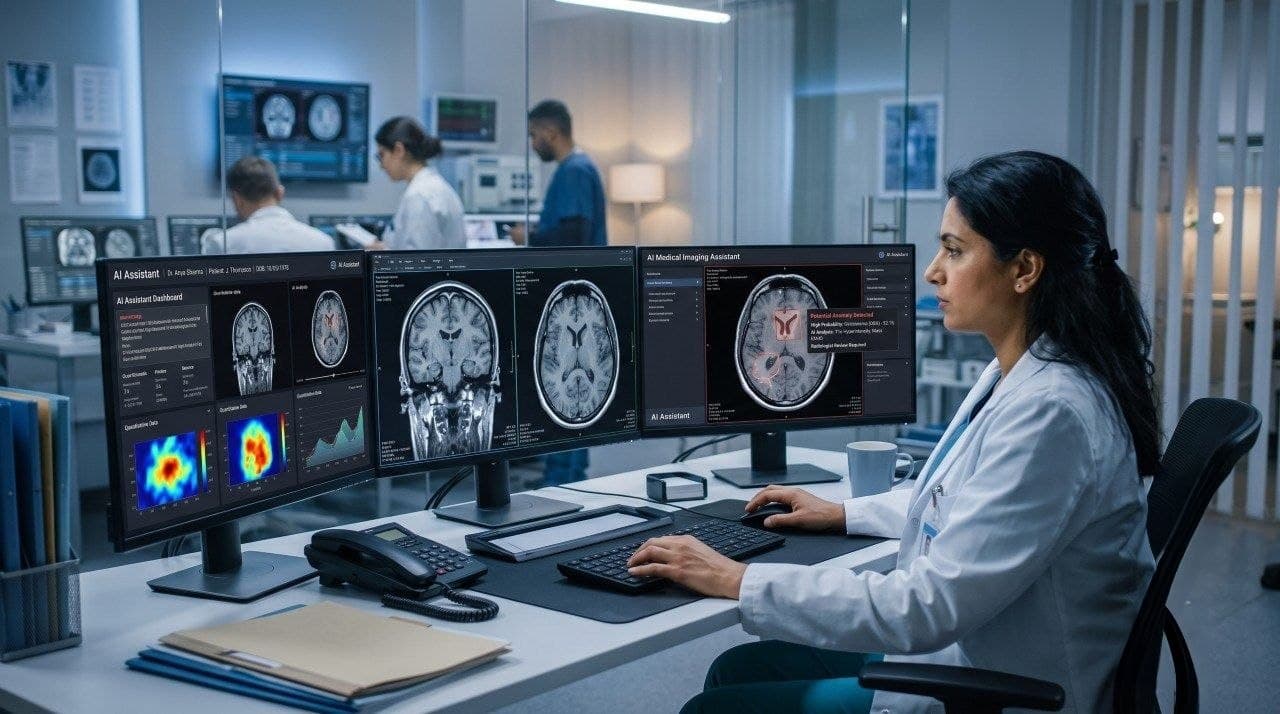
Healthcare's interoperability problem isn't a lack of data — it's that the data lives in hundreds of incompatible formats, spread across EHRs, labs, imaging systems, and paper charts that were never designed to talk to each other. Every new AI tool that ignores this reality ends up solving a demo problem, not a clinical one.
Where AI genuinely helps is less glamorous than diagnosis headlines suggest. Large language models are good at mapping messy, unstructured clinical notes onto structured standards like FHIR or HL7 — turning a free-text discharge summary into fields a downstream system can actually use. That mapping work used to require manual data entry teams; it's now a tractable machine learning problem.
AI is also useful for entity resolution — matching 'Mohammad S. Hossain' in one system to 'M. S. Hossain, DOB 04/12' in another, with a confidence score a human can review. And for summarization: condensing a patient's history across five providers into a single timeline a clinician can read in under a minute, instead of paging through disconnected PDFs.
None of this works without the other half of the problem: consent and access control. AI can merge and summarize data, but a patient still needs to control who sees it, and a system still needs an auditable record of every access. That's an infrastructure problem as much as a model problem — and it's the one I've spent the most time on.
Discuss this with me →